
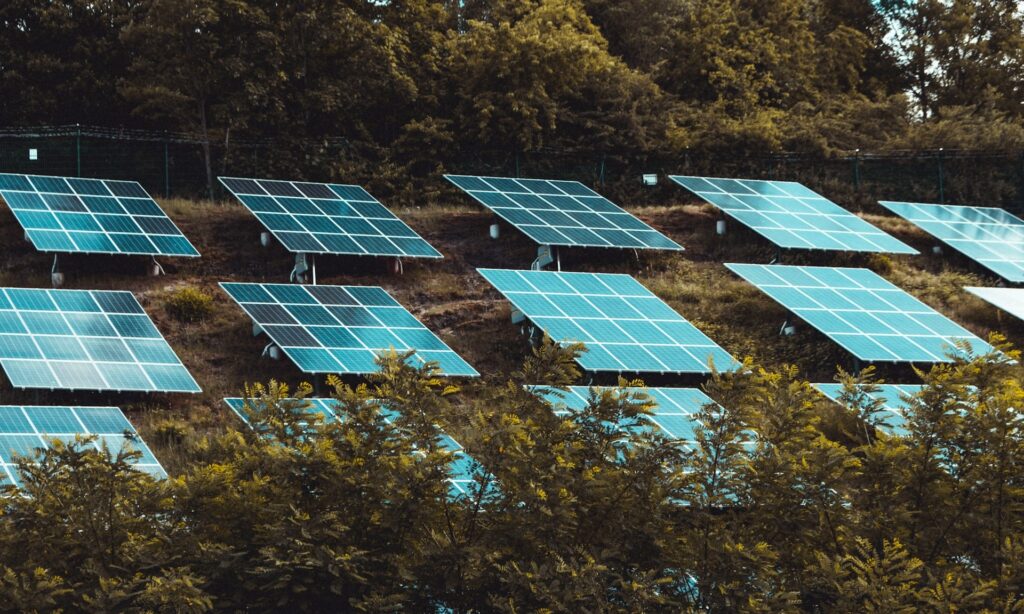
In 2023, there were still 666 million people with no access to electricity; 581 million of them live in sub-Saharan Africa. Just last year, in 2025, there were still 266 million people in the world experiencing acute food insecurity, including 35.5 million children suffering malnutrition. When we talk about multidimensional poverty, access to nutrition and electricity are vital indicators. But have you considered that if poverty can be multidimensional, so can solutions?
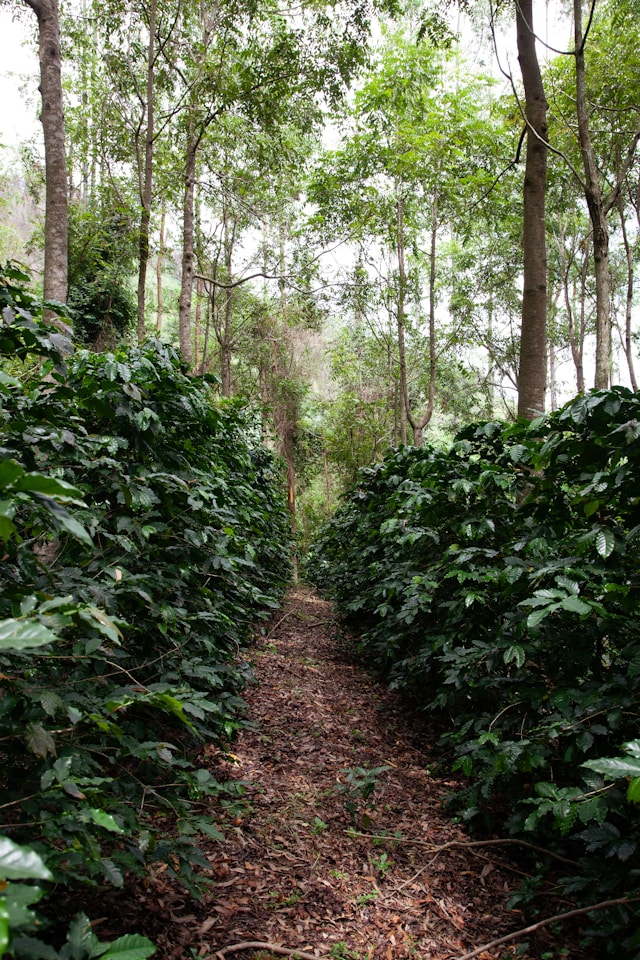
Agroforestry
Trees do amazing things for our planet. Their roots improve water penetration; they, at once, break up compacted earth and hold it in place against wind erosion and floods. Tall canopies shade the ground, preventing evaporation and improving water retention, while the detritus of fallen leaves provides mulch and nutrients, continuously improving the soil where they grow. Trees also provide shelter for man and beast, be it cover from the blazing sun or relief from raging wind and snow. Yet we have felled billions of trees over the course of history, in order to provide ourselves with energy fuel and our food of choice.
Agroforestry integrates trees – as well as shrubs – into crop and livestock systems. As a fad among hobbyist homesteaders, this notion has been popular since the early 2000’s. Called “permaculture” or “tree guilds,” the focus is on beneficial underplanting with fruit trees. But the concept isn’t new. In fact, the practice of incorporating trees with agriculture has a long history, especially in tropical and temperate climates around the word; it remains most prevalent today in Southeast Asia and South and Central America.
There are several ways to utilize the benefits of trees within a structured agricultural system. “Alley Cropping” intersperses the occasional row of trees or shrubs among rows of crops. This improves the soil and helps to anchor it against erosion, but the trees’ bulk also provides a wind block to protect the plants from violent weather. “Silvopasture” utilizes a sparse covering of trees with pastureland, which provides both pasture and livestock with shelter from the elements. Did you realize that some systems even cultivate crops directly underneath a loose forest canopy? “Forest Farming” generally focuses on high-value crops such as medicinal plants, or crops that thrive in shaded environments, such as mushrooms. This tree-dense system takes advantage of the microclimate that develops beneath a canopy, where temperatures are cooler and moisture collects rather than evaporates.
Want to Know More?
Read this Forestry.com article!
Photovoltaics
To oversimplify, photovoltaics transforms light into usable energy. The concept of using the sun’s energy dates back to ancient times and the use of mirrors to generate solar thermal power. Photovoltaics use solar cells, devices made of semiconductor materials, to convert solar energy into electricity. Commonly called “solar panels,” this technology has been in use since the 1960s, even powering US satellites in space! Today, they are growing in popularity for homes and businesses alike as the cost of electricity continues to climb. They are used to bring power to remote locations lacking other infrastructure, or to power specific devices, such as solar powered lights. A “Solar Farm” is a large-scale installation of these panels, mounted on the ground, and feeding electricity directly into the power grid. The first solar farms used solar thermal technology, such as Frank Shuman’s sun engine which, in 1913, pumped thousands of gallons of water from the Nile River in Egypt “as if by magic,” or the Solar Energy Generating Systems (SEGS) facility in the Mojave Desert (California, USA) built in the 1980s which still generated enough power for more than 230,000 homes throughout the 2010s.
Want to Know More about Solar Thermal technology?
Read this BBC article!
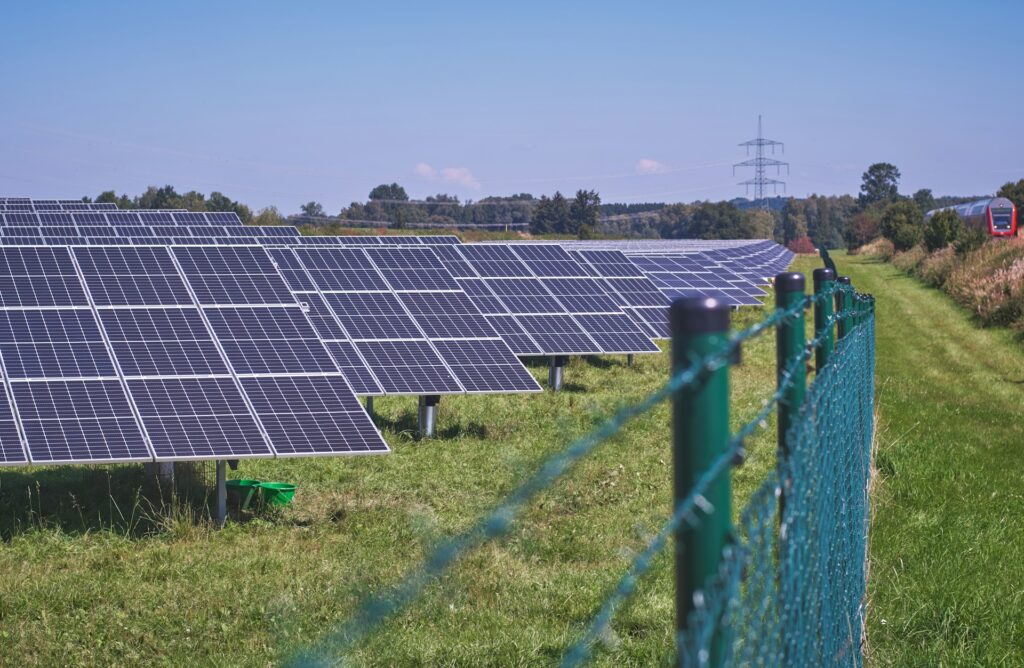
Whether utilizing mirrors or solar panels, to generate considerable amounts of electricity, installations take up considerable space. Neat as a vegetable patch, rows upon rows of panels can fill a couple of acres – or several hundred.
The use of solar power is increasing worldwide. By the end of 2025, photovoltaic solar arrays provided an estimated 6.5% to 7% of the world’s electricity…. In 2024, SolarPower Europe declared that solar installed capacity had doubled since 2022 to two terawatts.
While moving away from the use of fossil fuels is the way forward, there are concerns. To achieve America’s greenhouse gas reduction goals, for instance, some 22,000 square miles of solar panels would be needed – that’s over a million acres not used for farming. But some concerned areas concerned have started to get creative. One popular solution in cities is the solar car park, where panels are mounted high so automobiles can park underneath. It’s a win-win situation: an inexpensive and renewable energy is produced, and the vehicles are protected from the elements as they would be beneath a carport. But solar parking structures aren’t the only collaborative solution.
Agrivoltaics
Solar panels might not offer agriculture the same benefits as trees, but there is considerable overlap. Like a forest canopy, the panels provide shade and protection from the worst of the elements, conserving water and supporting a beneficial microclimate. Moving forward, the pairing of agriculture and photovoltaics may even be a necessity.
To meet energy goals by installing large-scale solar operations, agricultural land may be taken out of food production, but agrivoltaics offers the potential to balance food production and renewable energy goals.
– National Laboratory of the Rockies
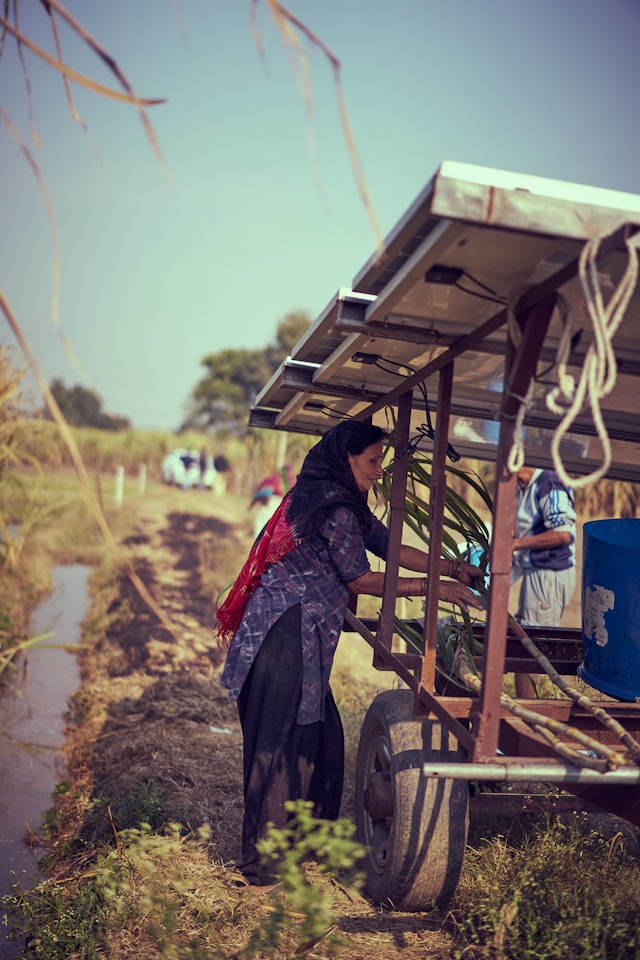
Crops that thrive in partial shade conditions can grow around solar installations; livestock can graze beneath panels as they sometimes do around oil rigs. Animals benefit from the shade, and their grazing helps manage unruly groundcover that would otherwise require maintenance by continuous, expensive mowing and/or herbicides that are harmful to the wider environment. Some installations have even developed wildlife habitats underneath, encouraging native species to thrive rather than forcing them out.
Finding solutions in this age of climate change can feel dichotic: to benefit society, nature pays a heavy toll, but to benefit nature can impose heavily on society. By utilizing cooperative solutions such as agrivoltaics we can instead implement a well-rounded benefit rather than limiting ourselves to singular solutions. Solar panel installations can power an African grid, while also providing delicate crops shelter from drought conditions – a multidimensional installation that addresses multidimensional poverty.
Further Resources:
Global Network Against Food Crises | 2026 Global Report on Food Crises (PDF)
World Bank | Access to Electricity: Who Remains Without Power?
Food and Agriculture Organization of the United Nations | Agroforestry
U.S. Energy Information Administration| Solar explained: Photovoltaics and electricity
Greenlancer | Solar Carports & Parking Canopies: Complete Guide for Installers
Solar Today | When Communities Oppose Large Solar and Wind Installations