
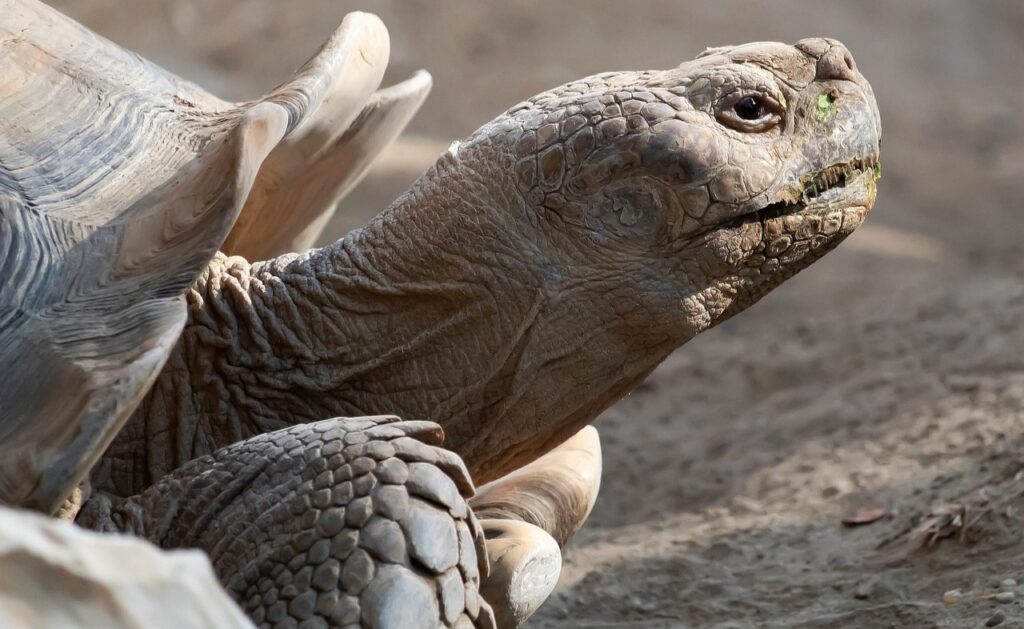
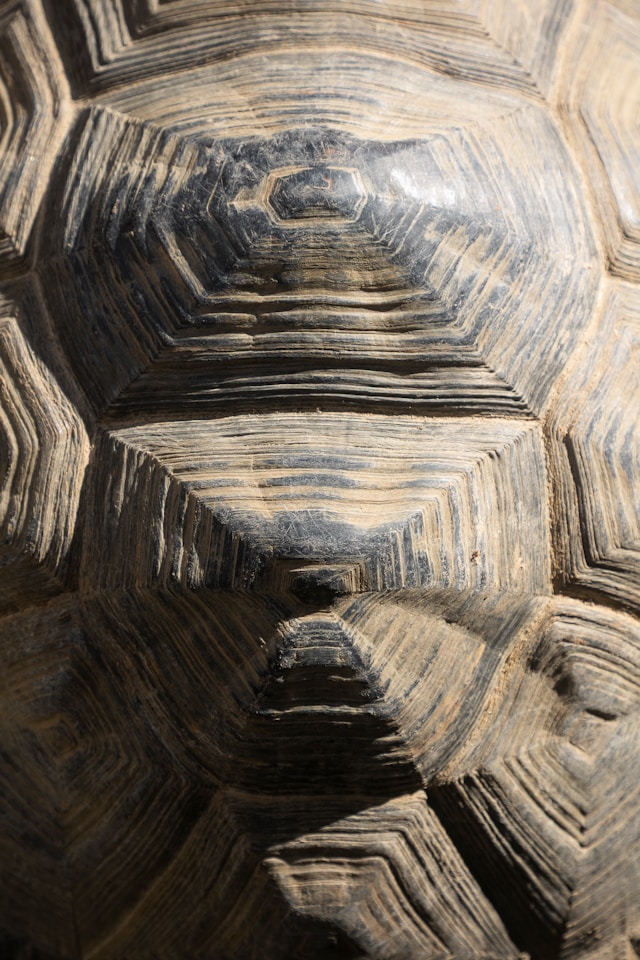
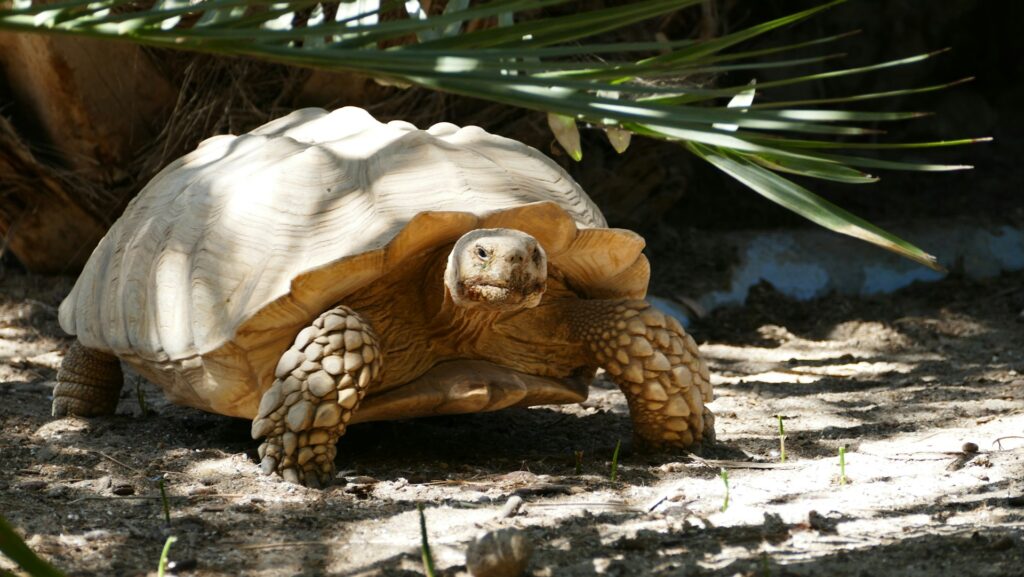
Native to the Sahel, the African Spurred Tortoise is the largest mainland tortoise in the world, and the third largest of all tortoise varieties. Also called sulcata tortoises (from their scientific name, Centrochelys sulcata), they are a rather boxy tortoise that can grow up to three feet across – and tall! – and weigh up to 110 pounds. They have unique shells, with pyramid-shaped scutes (shell segments) that form the furrows for which the sulcata tortoise was named. The spurs, on the other hand, refer to the pointed scales on the tortoise’s forelegs. To compliment to their robust physique, the African spurred tortoise has large, thick claws perfectly adapted for digging, gripping, and foraging.
Did You Know …?
The African Spurred Tortoise is a tortoise of many names! They are also commonly called the African spur thigh tortoise, or simply the sulcata tortoise. Even the scientific community has two names — Centrochelys sulcata, and Geochelone sulcata!
Ecosystem Engineers
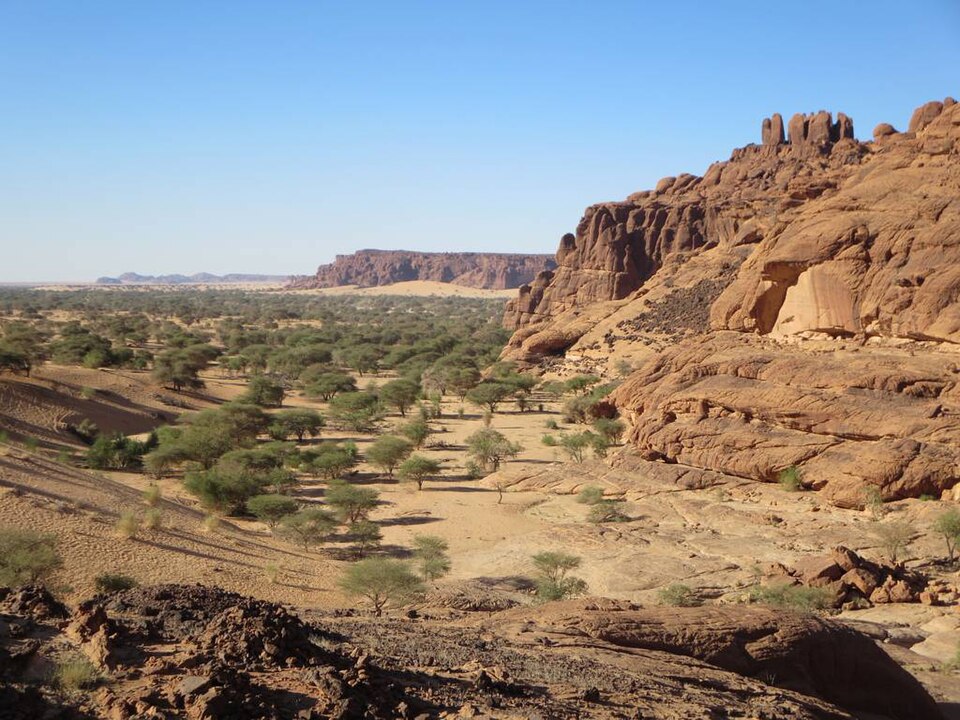
In the wild, African spurred tortoises dig large burrows to escape the Sahel’s extreme heat, retain moisture, and regulate their body temperature during the cold nights. But these dens benefit far more than just the tortoises who make them. In fact, tortoises transform the land. By digging, they break up drought-hardened soil, aerating the land and making it more accepting of rainwater that would run off in devastating floods. Wind-scattered seeds then take advantage, soaking up the lingering moisture and growing roots deep in the loosened earth. In other words, they create vital microclimates in an area plagued by desertification. Over time, the vegetation around the burrow thickens.
.jpg)
There are many threats to the African spurred tortoise, including the shrinking of their natural habitat due to desertification – but also to expanding agriculture throughout the region, and overgrazing. They also face depletion for trade and poaching, as well as suffer fatal encounters with farming infrastructure and farmers who see them a nuisance. With their population fragmented and declining, they are listed as endangered.
Exotic Pets
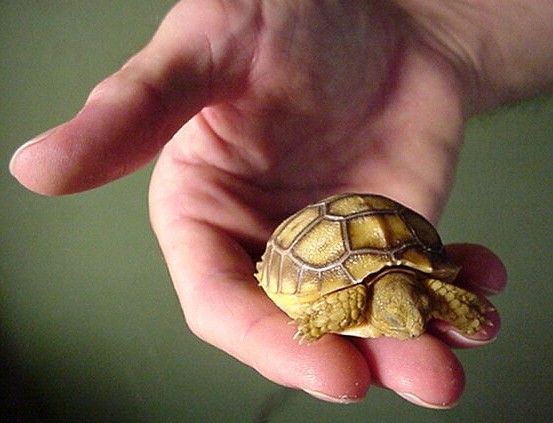
In America, however, they are thriving. Not unpopular among the exotic pet community, sulcata tortoises are easily bred in captivity, easily supplying the pet demand without depleting wild numbers. For the pet owner who finds great joy in providing ideal conditions, sulcata tortoises are appreciated for their outgoing personalities and curious natures. Others find life with a miniature bulldozer trying. Left to roam in the sunny outdoors, they eat the garden and dig up the yard; utility lines are inconsequential to their sturdy claws. Inside, they ram into things, break furniture, and even walls. Sometimes they mistake a human foot for a rival tortoise and ram it. Sometimes they bite (though usually by accident, during hand feeding). Sulcata hatchlings are small enough to fit in the palm of a hand, but in just 5-10 years can grow over 18″ and weigh more than 70 pounds! Rescue shelters in Florida and California, where these animals are especially popular, are overrun with 20 – 30-pound sulcata tortoises.
Did You Know …?
A Sulcata tortoise can live up to 150 years — many pets end up outliving their owners!
“To put the adult size in perspective: a 100-pound sulcata can push through a standard wooden fence, tip over a person, and excavate a burrow 10 feet deep and 30 feet long.”
– Hunter Briggs, writing for Reptile Direct
Want to Know More?
Check out this Reptile Magazine article!
Returning to the Wild
But petkeeping is not the only interactions humans have with the African spurred tortoise. In Senegal, the non-profit Save Our Sulcata (S.O.S.) has been releasing these tortoises along the Sahel’s southern edge since the early 1990s. Most recently, 500 African spurred tortoises were release in 2021. The researchers have since observed that the microclimates around tortoise burrows not only help revigorated plant species key to pushing back desertification, but have attracted all sorts of insects and microorganisms – which are beneficial to local farmers and gardeners, too. These in turn attract birds and other small animals, while vacated burrows provide much-needed shelter for other small animals. And so, by simply letting tortoises dig, biodiversity creeps back into the Sahel.
“Burrows altered the way water moved through the ground. Moisture held longer. Seeds began to germinate. Invertebrates showed up. Green cover sprouted in patches. Satellites captured the change over a five-year window.”
– Evelyn Hart, writing for Indian Defence Review
Resources
Fact Animal – African Spurred Tortoise Facts
Animal Diversity Web – Geochelone sulcata (African Spurred Tortoise)
Biology Insights – Are Tortoises Dangerous? Risks to Owners Explained